
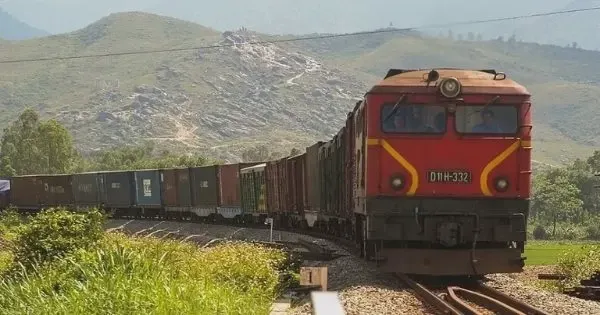
Between sea freight that takes a month and air freight that eats your margin, a third option has matured for Vietnam exporters: rail freight through the China-Europe rail corridor. Over the past few years, the trans-Eurasian rail network has grown from a niche experiment into a reliable middle lane — roughly 16 to 22 days from North Vietnam to Western Europe, at a cost that sits comfortably between ocean and air. For Vietnamese manufacturers of electronics, furniture, garments, and auto parts shipping to Germany, Poland, the Netherlands, or France, rail is no longer a curiosity. It is a procurement tool worth understanding.
This guide explains how rail freight from Vietnam to Europe actually works today: the routing options, realistic transit times, what it costs, how customs clearance works across two borders, and when rail beats both FCL ocean shipping and air freight for your specific cargo.
Why Rail from Vietnam to Europe Is Suddenly Practical
Vietnam has no direct rail link to Europe — its metre-gauge network ends at the Chinese border. So “rail freight from Vietnam” really means a multimodal solution: your cargo travels the first leg from Vietnamese factories to a Chinese or Lao rail terminal, then rides the standard-gauge China-Europe express for roughly 10,000 km across Kazakhstan, Russia, and Belarus into the European Union, typically entering via Małaszewicze in Poland before fanning out to Duisburg, Hamburg, Milan, or Madrid.
Two developments made this practical. First, the China-Europe rail network now runs thousands of scheduled block trains per year, with fixed departure slots from hubs like Chengdu, Chongqing, Xi’an, and Yiwu — enough capacity that forwarders can offer weekly or twice-weekly consolidations rather than waiting for a full train. Second, the Lao-China Railway (opened in 2021) created a southern entry point: cargo from Ho Chi Minh City can move by truck or barge up the Mekong corridor to Vientiane’s Thanaleng dry port, then join northbound China-Europe trains without transiting through China’s congested eastern gateways.
For North Vietnam, the classic route is even simpler. Factories around Hanoi load containers that travel by road through the Dong Dang–Pingxiang border gate into Guangxi, transfer to rail at Nanning, and connect to westbound China-Europe services. In practice, most shipments are quoted door-to-door, so you rarely need to think about the transshipment points — but understanding them helps you evaluate quotes and troubleshoot delays.
Rail vs Sea vs Air: An Honest Comparison
The right way to think about rail is not as a replacement for ocean shipping but as a third lane in your supply chain. Here is how the three modes compare for a typical shipment from Hanoi to Duisburg:
| Factor | Sea Freight (FCL) | Rail Freight | Air Freight |
|---|---|---|---|
| Transit time | 32–42 days | 16–22 days | 5–8 days |
| Cost per 40ft container (indicative) | $3,500–5,500 | $7,000–10,000 | $25,000+ equivalent |
| Cost per kg (LCL) | $0.35–0.60/kg | $1.10–1.80/kg | $4.00–7.00/kg |
| Schedule reliability | Moderate (port congestion) | High (fixed slots) | High |
| CO₂ emissions | Lowest | ~1⁄5 of air freight | Highest |
| Best for | High-volume, cost-driven cargo | Mid-value, time-sensitive cargo | Urgent, high-value, light cargo |
Two patterns emerge from this table. Rail roughly halves ocean transit time for about double the cost, and it undercuts air freight by 60–75% while adding roughly two weeks. That middle position makes rail the sweet spot for cargo where a month at sea risks a stock-out but air freight would erase the profit — think seasonal consumer goods, replenishment for European distributors, automotive parts feeding just-in-time lines, and e-commerce inventory for Q4.
There is also a reliability argument. Ocean schedules from Vietnam to North Europe have been volatile, with port congestion and blank sailings adding one to three weeks of uncertainty. Rail runs on fixed weekly slots, and because the corridor crosses Kazakhstan, Russia, and Belarus by land, it is largely insulated from the Red Sea and Suez disruptions that have whipsawed ocean rates since 2024. Many shippers now treat rail as a hedge: they move 70% of volume by sea and keep rail capacity reserved for the balance.
How the Journey Works, Step by Step
A rail shipment from Vietnam to Europe involves more handoffs than an ocean booking, which is exactly why most importers route it through an experienced forwarder rather than piecing it together themselves. Here is the typical sequence:
- Export customs in Vietnam. The forwarder collects your Commercial Invoice, Packing List, and booking confirmation, files the export declaration with Vietnam Customs, and arranges a Certificate of Origin (Form EUR.1 where applicable, for preferential EU tariffs under EVFTA).
- First leg to the rail terminal. Depending on origin, cargo moves by truck from the factory to Dong Dang/Pingxiang (North Vietnam), or southbound via the Lao-China Railway from Thanaleng (South Vietnam). Reefer and oversized cargo are both possible but must be declared early.
- China transit and re-export formalities. Your container is customs-sealed for transit through China, then loaded onto the China-Europe block train. This is where working with a forwarder matters: transit documentation must be perfect, or the train depot holds the box.
- Eurasian corridor. The train crosses Kazakhstan, Russia, and Belarus under the TIR/transit regime — normally no intervention, though transit time can stretch a few days in peak winter or during slot congestion at Dostyk/Alashankou.
- EU entry at Małaszewicze. Here the customs clearance that matters happens. The container is moved from 1,520 mm broad-gauge wagons to standard European gauge, and your import declaration is filed with Polish/EU customs. Duties and VAT are assessed based on the HS code and Incoterms — goods covered by the EU-Vietnam Free Trade Agreement (EVFTA) can claim reduced or zero duties with a valid origin certificate.
- Final delivery. From the border terminal, cargo moves by truck or short rail to consignees in Germany, the Netherlands, France, or beyond. Under a DDP arrangement, the forwarder also prepays duties and delivers straight to the warehouse door.
If you are new to importing from Vietnam overall, our step-by-step guide to importing from Vietnam walks through supplier verification, payment terms, and documentation — all of which apply equally to rail shipments. And because rail pricing quotes depend heavily on who pays for what, it is worth refreshing yourself on Incoterms 2020 before you negotiate with your supplier.
What Does Rail Freight from Vietnam to Europe Cost?
Rail is priced per container (40ft HQ or 20ft) on the core leg, plus the first-mile haul from your Vietnamese factory and the European delivery. Indicative door-to-door figures for 2026, Hanoi to Duisburg:
| Route leg | Typical cost (40ft) | Notes |
|---|---|---|
| Vietnam factory → rail terminal | $800–1,500 | Truck via Dong Dang or Lao corridor |
| Core rail leg to EU border | $5,500–7,500 | Varies with slot availability and season |
| EU customs + final delivery | $900–1,600 | Includes clearance, duties handling, trucking |
| Door-to-door total | $7,000–10,000 | ~16–22 days |
For LCL shippers who do not fill a container, rail consolidation runs roughly $1.10–1.80 per chargeable kilogram with a 2–3 CBM minimum — still far below air cargo rates, which you can benchmark in our article on air freight volumetric weight and chargeable weight. A useful rule of thumb: rail becomes cost-competitive with sea when the value density of your goods exceeds roughly $8–10 per kilogram and the delay cost of a month at sea exceeds the freight differential.
Rates on the China-Europe corridor fluctuate with demand and geopolitics. Peak season (September–November ahead of the European retail calendar) can add 15–25%, while eastbound-empty repositioning sometimes creates soft westbound pricing in spring. Booking four to six weeks ahead locks in both the slot and the rate.
Customs, Documents, and Compliance on the Rail Corridor
Documentation is where rail shipments live or die, because the cargo crosses four customs territories before reaching the EU. Your document set should include:
- Commercial Invoice and Packing List — consistent with each other and with the declared HS codes
- Bill of Lading / Rail Waybill (CIM/SMGS) — the rail transport contract; note that rail waybills are not negotiable documents like ocean B/Ls, so payment terms should account for that
- Certificate of Origin (C/O Form EUR.1 or EUR-MED) — to claim EVFTA duty preferences in the EU
- Transit declarations — T1 for EU transit after border clearance
- Insurance certificate — rail cargo insurance is inexpensive relative to ocean all-risk and worth carrying
The biggest practical pitfall is HS classification mismatches between what the Vietnamese exporter declares and what the EU importer clears. A discrepancy at Małaszewicze can park a container for a week. Our guide to HS codes for importing from Vietnam explains how to classify correctly before the shipment moves. It is also wise to confirm with your forwarder how sanctions screening is handled on the Russia-Belarus transit segment — compliant general cargo is unaffected, but dual-use goods require extra paperwork and some forwarders simply decline them.
For a deeper look at the Vietnamese side of the paperwork, see our Vietnam customs clearance guide, which covers export declaration filings, inspection rates, and the documents Vietnamese factories must prepare.
When Rail Is the Right Choice (and When It Is Not)
Rail earns its keep in a specific band of shipping scenarios. Choose rail when:
- Your cargo is worth enough that 30+ days of inventory in transit ties up meaningful working capital, but not so light and urgent that only air works
- You need predictable arrival dates — rail’s fixed weekly slots are far easier to plan around than volatile ocean schedules
- You are shipping Amazon FBA replenishment to European fulfillment centers and miss a cut-off by sea but cannot afford air
- Sustainability matters to your customers; rail emits roughly a fifth of the CO₂ per ton-kilometer of air freight
- You want a standing “fast lane” alongside your ocean volume as disruption insurance
Stick with sea when your cargo is low-value, heavy, and non-urgent — ocean FCL from Haiphong or Cat Lai remains unbeatable on cost per unit. Stick with air for true urgency, perishables, samples, and cargo under ~300 kg. If you are moving furniture or project cargo in full containers, our comparison of 20ft vs 40ft containers will help you pick the right equipment before you request a rail quote.
Frequently Asked Questions
Is there a direct train from Vietnam to Europe? No. Vietnam’s rail network uses metre gauge and ends at the Chinese border. Rail shipments from Vietnam are multimodal: truck or Vietnamese rail to a China-Europe rail terminal (via Dong Dang/Pingxiang in the north or the Lao-China Railway in the south), then a through-block train to the EU.
How long does rail freight from Vietnam to Europe take? Plan for 16–22 days door-to-door, including first-mile trucking, border transfers, and EU delivery. North Vietnam origins are typically 2–4 days faster than Ho Chi Minh City origins.
Is rail freight reliable given the Russia-Belarus transit? For general commercial cargo, yes — services run on fixed weekly slots and transit formalities are well established. Dual-use and sanctioned goods are a different matter and are excluded from standard rail products.
Can I ship LCL by rail from Vietnam to Europe? Yes. Weekly rail consolidations accept LCL from around 2–3 CBM, at roughly $1.10–1.80 per chargeable kg — typically 50–70% cheaper than air freight for the same lane.
Does EVFTA reduce duties on rail-shipped goods? The transport mode is irrelevant to tariffs. What matters is a valid Certificate of Origin proving EVFTA-eligible Vietnamese origin — rail, sea, or air. Goods with proper C/O documentation enter the EU at reduced or zero duty rates.
Getting a Rail Freight Quote from Vietnam
Rail pricing is lane-specific, and the difference between a well-built quote and a cheap one is usually hidden at the transshipment points. When you are ready to compare options, VNForwarder can put together a door-to-door rail, sea, and air comparison for your exact cargo within 2–4 hours — covering the first-mile pickup in Vietnam, corridor transit, EU customs clearance, duties handling, and final delivery, with one dedicated account manager tracking the shipment from factory gate to consignee dock. Send us your cargo details and destination, and we will show you whether rail is the smart middle lane for your next shipment.